
Peptides, GLP-1s, and the Root Cause: What Every Functional Practitioner Needs to Know
If you've been anywhere near the functional health space this year, you already know peptides are the conversation. GLP-1s in particular have gone from a niche diabetes drug to a household name — and your clients are asking about them whether you brought them up or not.
Here's the problem. Most of what's being said about peptides online is either hype or oversimplification. "Take this, lose weight." "Try this one for recovery." Protocol talk with no clinical reasoning underneath it. And if you're a coach or practitioner trying to actually help people — not just hand out the trend of the month — that gap is where you either build real authority or get lost in the noise.
I taught a 90-minute masterclass on exactly this: how peptides work, where they fit, and why they succeed brilliantly for some clients and fail completely for others on the identical dose. This article is the written version of the core ideas, written for the people who take this work seriously — aspiring and current functional nutrition practitioners and coaches.
Let's get into it.
Why Peptides Are Everywhere (And Where Practitioners Get It Wrong)
Peptides aren't new — your body makes thousands of them. What's new is the cultural moment. GLP-1 medications made "peptide" a mainstream word, and now every wellness account online has an opinion.
The mistake most practitioners make isn't a lack of enthusiasm. It's treating peptides as the intervention rather than as a tool within a larger system. A peptide can move a marker beautifully and still leave the actual driver of dysfunction completely untouched. When that happens, you get the pattern we've all watched play out publicly: rapid results, then a plateau, then regain the moment the client comes off.
That's not a failure of the peptide. It's a failure of sequencing — and sequencing is a clinical skill, not a protocol you can copy off Instagram.

What Peptides Actually Are: The Three Categories That Matter
To use peptides well, you need a mental map of what they do. In the masterclass, I break them into three working categories:
GLP-1 and metabolic peptides. The ones everyone's talking about. They slow gastric emptying, enhance glucose-dependent insulin secretion, and act on satiety pathways. Powerful for weight and blood-sugar markers — and, as we'll see, incomplete on their own.
Gut peptides. The peptides involved in gut lining integrity, motility, and repair. This is where functional practitioners have a massive edge, because the gut is so often the upstream driver everyone else ignores.
Recovery and longevity peptides. The peptides associated with tissue repair, inflammation modulation, and healthy aging. Optimization tools — valuable, but only after the foundation is in place.
Notice the throughline: some of these are for fixing, and some are for optimizing. Using an optimization tool on a foundation that's still broken is one of the most common and expensive mistakes in this space.
How Glp-1s Influence Metabolic Health
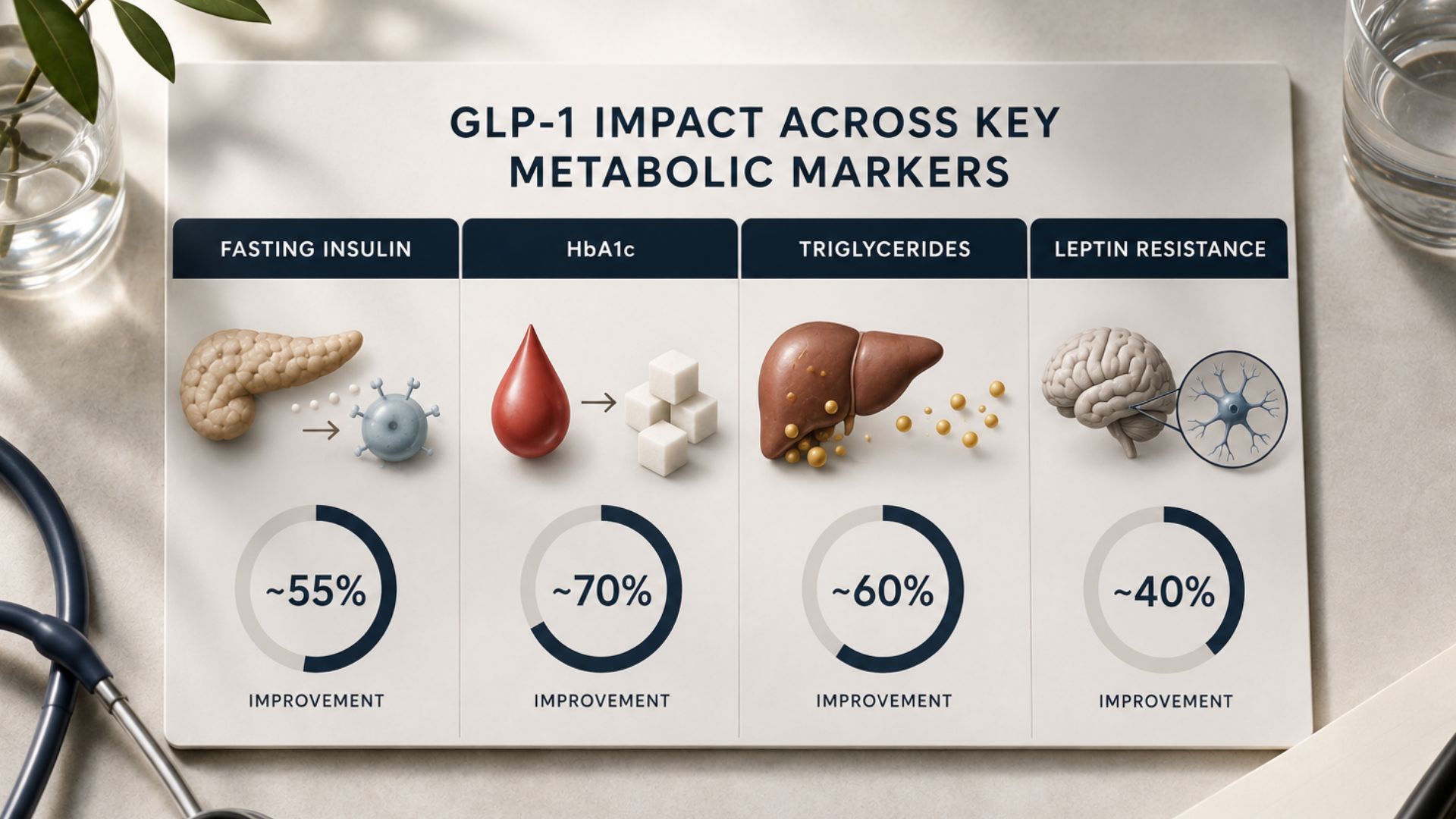
This was the slide that got the most screenshots on the night, so let me walk you through it.
GLP-1s genuinely improve the metabolic markers we track. The catch is that they improve them at the symptom level — while the root-cause dysfunction underneath keeps running. Here's how that plays out across four key markers:
Fasting insulin — the first marker to rise, often years before HbA1c climbs. GLP-1s improve secretion efficiency (roughly a 55% impact): the pancreas responds appropriately, but receptors don't change. Muscle, liver, and adipose tissue still fail to respond, so hyperinsulinemia persists.
HbA1c — your window into cumulative glucose exposure and systemic inflammation. GLP-1s lower glucose exposure hard (roughly 70% impact) through slower gastric emptying and enhanced glucose-dependent insulin. But LPS endotoxemia keeps driving cytokine-mediated hepatic glucose underneath.
Triglycerides — a surrogate marker for gut-derived endotoxin reaching the liver. GLP-1s reduce circulating triglycerides (roughly 60% impact) through improved clearance and lower VLDL output — while gut-liver axis inflammation keeps driving hepatic lipogenesis via TLR4. The endotoxin load never stops.
Leptin resistance — a hypothalamus desensitized to leptin despite high circulating levels. GLP-1s bypass the broken signal (roughly 40% impact) using alternative brainstem and hypothalamic satiety pathways — but central leptin signaling stays broken, and dysregulation returns post-therapy.
See the pattern? Every marker improves. Not one root cause resolves. That single insight is the difference between a practitioner who names a protocol and one who understands what's actually driving the outcome.
The Hidden Reason Glp-1s Stop Working
If you look closely at that breakdown, the same culprit keeps showing up: the gut.
There's a quiet chain of events I call the gut-LPS-cytokine cascade. When the gut barrier is compromised, bacterial endotoxins (LPS) leak into circulation. That triggers a low-grade, cytokine-mediated inflammatory response that drives hepatic glucose production, fuels hepatic lipogenesis, and blunts the very receptors a GLP-1 is trying to work through.
In other words: the gut quietly sabotages GLP-1 response in a large share of clients — long before any obvious digestive symptom shows up. It's why two clients on the identical dose can have completely different outcomes. One has a relatively intact foundation; the other is fighting an endotoxin load the peptide was never designed to address.
This is exactly the kind of upstream thinking that separates a functional practitioner from someone just following a prescribing chart.
The Lab Markers to Run Before a Peptide Is on the Table
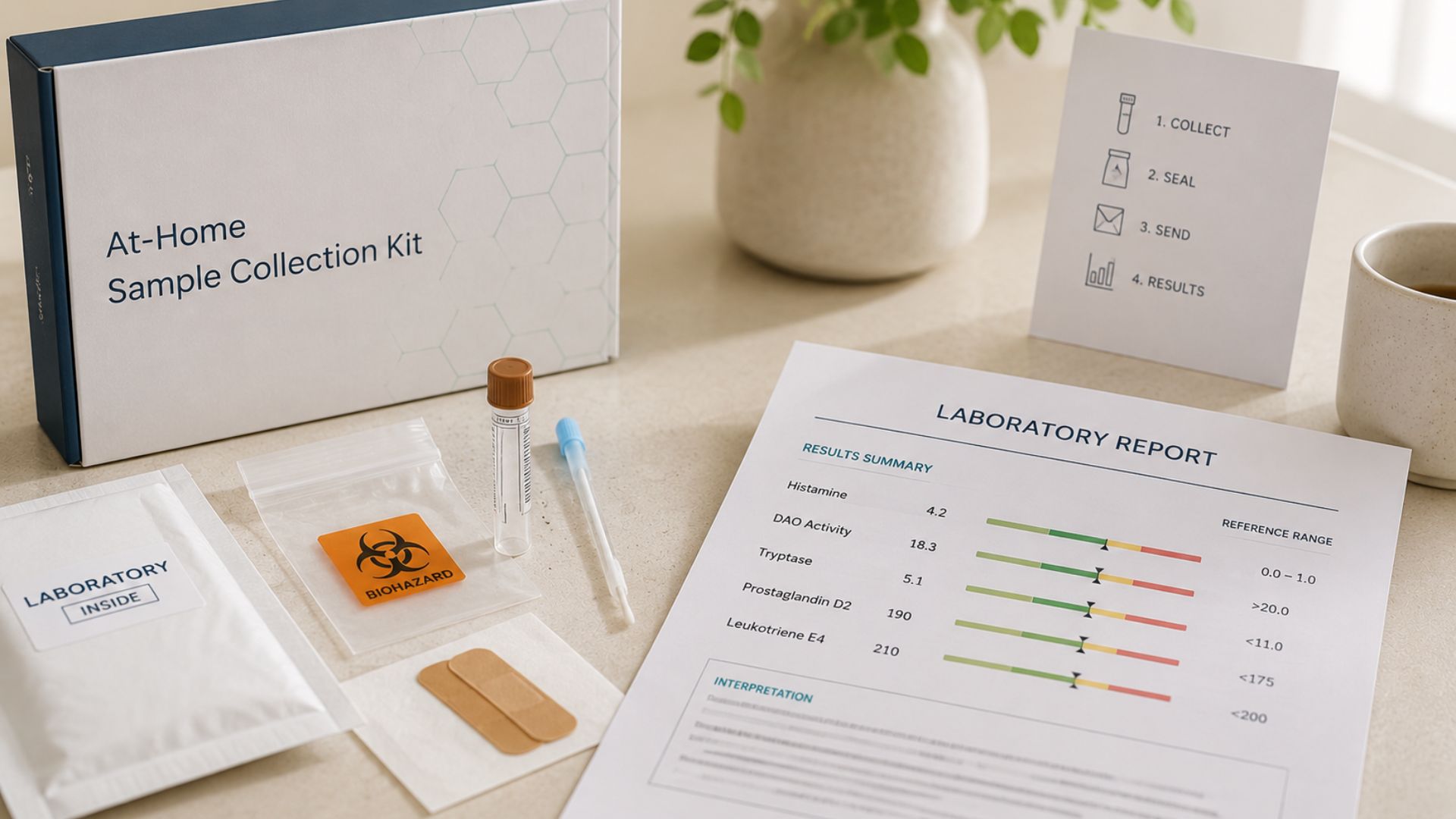
You can't sequence what you can't see. Before a peptide ever enters the conversation, you want a picture of what's actually happening metabolically. Fasting insulin is a perfect example of an underused, high-value marker — it moves years before HbA1c and tells you whether you're looking at an early problem or an advanced one.
The broader point: the markers you run before an intervention tell you whether the body will respond, plateau, or regress. Reading a foundation panel and identifying the real driver — not just flagging what's out of range — is a learnable clinical skill. It's also one of the most valuable things you can offer clients in a market flooded with guesswork.
(A note on scope: reviewing labs and summarizing findings sits well within a functional nutrition practitioner's lane. Diagnosing, treating, or prescribing does not. Knowing exactly where that line is — and practicing confidently inside it — is part of what proper training gives you.)
The RSN Sequencing Framework: Healing Before Optimization
Everything above points to one principle: you are not broken — the approach has been wrong. And the right approach is a sequence, not a stack.
The framework I teach moves in order: nervous system → drainage → gut → cellular → hormones → optimization. You calm the system, open the exits, repair the gut barrier, restore cellular function, balance hormones — and only then reach for the optimization tools like peptides.
Run that order and a GLP-1 stops being a temporary mask and starts amplifying real healing. Run it out of order and you get the plateau-and-regain cycle the whole industry is now watching happen in public.
Same tools. Different order. Completely different outcome. That's the entire game.
What This Means for Your Practice

Here's the honest opportunity. The demand for peptides and GLP-1 guidance is enormous and growing. The supply of practitioners who can think about them at the root-cause level is tiny. That gap is your career.
Clients don't stay with the person who handed them a protocol. They stay with the practitioner who understood why — who ran the right markers, saw the gut driver everyone else missed, and sequenced the plan so the results actually held. That's the practitioner people drive across the state to see and refer their friends to.
The good news is that this is teachable. The systems thinking, the lab interpretation, the sequencing — none of it is innate. It's a methodology. And it's exactly what the RSN Institute was built to give you.
Individual results vary and are not typical or guaranteed.
Watch the Full Masterclass Replay
If this resonated, the full 90-minute Peptide Precision Masterclass goes deeper than any article can — the peptide categories, the marker breakdown, the gut cascade, and the sequencing framework, all with the clinical detail behind them.
🎥 Watch the full replay here:
Become a Certified Functional Nutrition Practitioner
If you're ready to actually do this work — to read the panel, find the driver, and sequence the plan with confidence — that's what the RSN Institute of Functional Nutrition is for.
It's a structured, two-tier clinical certification with the science and the business blueprint to build a real practice around it:
Tier I — Functional Nutrition Certification: the complete root-cause methodology and sequencing framework. Graduates earn the Functional Nutrition Coach credential and pre-qualify for AANWC board certification.
Tier II — Functional Nutrition + Advanced Lab Interpretation: everything in Tier I, plus the advanced lab work to identify the real driver and build the protocol in the right order. Graduates earn the Functional Nutrition Practitioner (FN-P) credential, pre-qualify for AANWP or AANWC board certification, and are eligible to sit the ANWPB board exam.
The Institute is independently accredited by the AANWP, ANWPB, and AANWC — which is why your RSN training pre-qualifies you for board certification without additional coursework. U.S. graduates are also approved for GEHA licensing: a private, faith-based ecclesiastical license — not a state or government license — that gives non-state-licensed wellness professionals a clearly defined scope of practice, available in all 50 states.
To be straight about it: these are professional credentials and a defined practice framework — not a state or medical license. That clarity is exactly what lets you practice with confidence.
The best next step is a conversation. Book an admissions call and we'll talk through where you are, what you're building, and whether the Institute is the right fit for you.
The industry doesn't need more people repeating the trend of the month. It needs practitioners who understand the why. If that's the practitioner you want to be, let's talk.